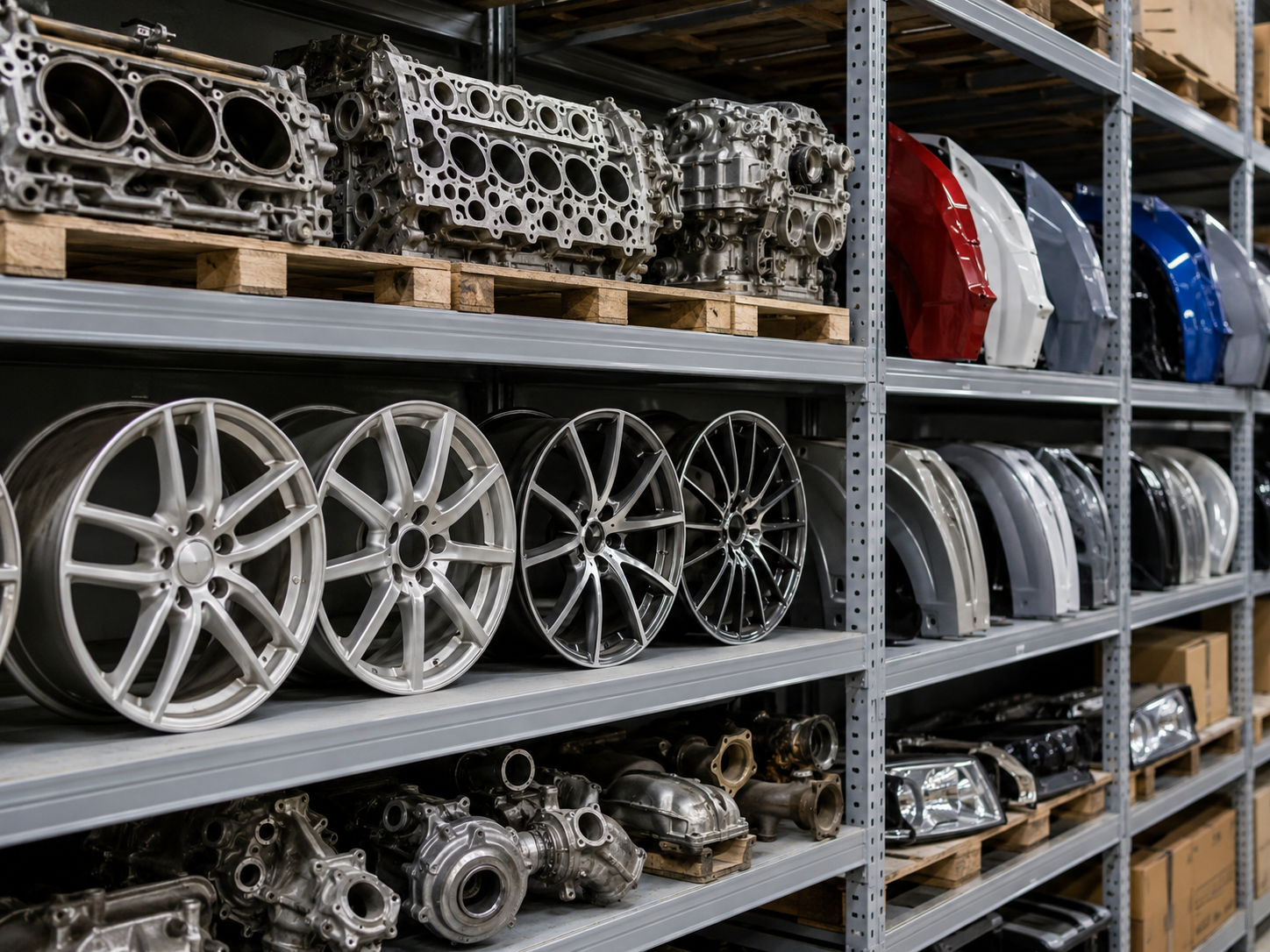
Top 5 Most Commonly Replaced Car Parts (And What They Cost Used vs New)
No car part lasts forever. Regardless of how well you maintain your vehicle, certain components wear out through normal use and need to be replaced periodically. For Melbourne drivers, knowing which parts fail most frequently — and understanding the cost difference between buying new versus quality used — can save hundreds or even thousands of dollars over the life of a vehicle.
Below we cover the five most commonly replaced auto parts, explain why they fail, and give you a realistic breakdown of what they cost new versus what you can expect to pay sourcing quality used parts from a trusted wrecker like Eline Auto Parts.
1. Brake Pads and Brake Discs
Brakes are the most frequently replaced safety component on any vehicle. Brake pads are designed as a consumable item and wear down gradually through normal use. How quickly they wear depends on driving style, vehicle weight, and the quality of the original pads — city driving with frequent stop-start traffic accelerates wear significantly compared to highway driving.
Brake discs (rotors) last longer than pads but also have a finite lifespan. They wear slightly with every braking event and can warp due to heat stress, particularly if the vehicle has been driven with worn pads for too long.
Signs You Need New Brakes
- Squealing or screeching when braking — this is the wear indicator built into the pads
- Grinding metal-on-metal noise, which indicates the pads are completely worn
- Pulsating or vibrating brake pedal when stopping
- The vehicle pulling to one side when braking
- Longer stopping distances than usual
Cost Comparison
- New OEM brake pads (per axle): $150 to $350
- New aftermarket brake pads (per axle): $60 to $180
- Quality used brake pads from a low-mileage donor: $30 to $80
- New OEM brake disc (each): $120 to $280
- Quality used brake disc (each): $40 to $120
Note: For brake pads specifically, buying new is often recommended given how critical they are to safety and how relatively affordable they are. However, brake discs from a low-mileage donor vehicle can be an excellent value option.
2. Shock Absorbers and Suspension Components
Shock absorbers control how your vehicle responds to bumps, dips, and undulations in the road. Over time, the internal seals and fluid in a shock absorber degrade, reducing its ability to dampen suspension movement. This affects not just comfort but vehicle stability and tyre contact with the road — making worn shocks a safety concern as much as a comfort issue.
Suspension bushings — the rubber components that cushion connections between suspension parts — also wear out and harden over time, leading to clunking noises and imprecise handling.
Signs You Need New Shock Absorbers
- The vehicle bounces excessively after going over bumps
- Nose-diving when braking and squatting when accelerating
- Uneven tyre wear across the tread surface
- Rattling or clunking from the suspension when driving over rough surfaces
- Oil leaking from the body of the shock absorber
Cost Comparison
- New OEM shock absorbers (pair, front or rear): $400 to $800
- New aftermarket shock absorbers (pair): $180 to $380
- Quality used shock absorbers (pair) from low-mileage donor: $90 to $200
Shock absorbers are typically replaced in pairs (both front or both rear) to maintain balanced handling. Sourcing quality used units from a low-mileage donor vehicle can provide significant savings.
3. Alternators and Starter Motors
The alternator is responsible for charging your vehicle’s battery and powering the electrical systems while the engine is running. The starter motor cranks the engine to start it. Both are electromechanical devices subject to wear over time and typically have a lifespan of around 100,000 to 150,000 kilometres under normal conditions.
When either of these components fails, the consequences are obvious and immediate. A failed alternator means your battery will drain while driving, eventually leaving you stranded. A failed starter motor means the car simply will not start.
Signs Your Alternator May Be Failing
- Battery warning light on the dashboard
- Dimming headlights or interior lights, particularly at idle
- Electrical accessories behaving erratically
- A whining or grinding noise from the alternator area
- The battery going flat frequently despite being in good condition
Signs Your Starter Motor May Be Failing
- A clicking noise when you turn the key but the engine does not crank
- Slow or sluggish engine cranking, particularly when the engine is warm
- Intermittent starting problems — sometimes starts, sometimes does not
Cost Comparison
- New OEM alternator: $380 to $700
- Reconditioned alternator: $180 to $350
- Quality used alternator from tested wrecker stock: $80 to $200
- New OEM starter motor: $300 to $600
- Quality used starter motor from tested wrecker stock: $70 to $180
Electrical components like alternators and starter motors are an excellent candidate for quality used parts — provided they have been tested before sale. Eline Auto Parts tests all electrical components in our inventory before they are listed for sale.
4. Alloy Wheels and Rims
Alloy wheels are damaged more often than most drivers realise. Kerbing damage, pothole impacts, and corrosion all take a toll over time. A cracked or significantly buckled alloy wheel is a safety hazard that requires replacement. Cosmetic kerb damage, while frustrating, is generally less urgent but still diminishes the vehicle’s appearance.
Replacing alloy wheels with new OEM equivalents can be surprisingly expensive — particularly for European vehicles or those with larger diameter wheels. Quality used alloy wheels from a compatible donor vehicle are often a cost-effective and visually identical solution.
Cost Comparison
- New OEM alloy wheel (each, 16 to 18 inch): $300 to $700
- New aftermarket alloy wheel (each): $100 to $300
- Quality used OEM alloy wheel (each): $60 to $200
When sourcing used alloy wheels, ensure you specify the correct bolt pattern (PCD), centre bore diameter, offset, and width for your specific vehicle. These specifications vary between makes and models and even between model years.
5. Headlights, Tail Lights, and Body Panels
Exterior lighting and body panels are among the most commonly replaced parts following minor accidents, parking incidents, and stone chip damage. A cracked headlight lens, broken indicator housing, or dented door panel might not affect drivability, but they can result in a failed roadworthy inspection and affect the vehicle’s resale value.
New headlight assemblies in particular have become very expensive on modern vehicles, with some units incorporating LED or adaptive beam technology costing $500 to $1,500 or more per unit from a dealer. Quality used units from a compatible donor vehicle at a fraction of the cost are an increasingly popular solution.
Cost Comparison — Headlight Assembly
- New OEM headlight assembly: $400 to $1,500 depending on technology
- New aftermarket headlight: $100 to $400
- Quality used OEM headlight from wrecker: $80 to $300
Cost Comparison — Door Panel or Guard
- New OEM door panel (unpainted): $500 to $1,200
- New aftermarket door panel: $150 to $500
- Quality used door panel (colour-matched from donor): $80 to $350
Used body panels that come from a colour-matched donor vehicle can save on painting costs as well — a significant additional saving in the overall repair budget.
Summary Savings Table
| Part | New OEM Cost | Used Cost | Typical Saving |
| Brake Discs (each) | $120–$280 | $40–$120 | 50–65% |
| Shock Absorbers (pair) | $400–$800 | $90–$200 | 60–75% |
| Alternator | $380–$700 | $80–$200 | 65–80% |
| Starter Motor | $300–$600 | $70–$180 | 65–75% |
| Alloy Wheel (each) | $300–$700 | $60–$200 | 60–75% |
| Headlight Assembly | $400–$1,500 | $80–$300 | 70–80% |
| Door Panel | $500–$1,200 | $80–$350 | 60–75% |
How to Know If a Used Part Is Right for Your Repair
Used parts are an excellent option in most situations, but there are a few guidelines worth keeping in mind:
- Safety-critical components (brake pads, steering components, airbags) should be sourced from a trusted supplier that tests before sale — never buy these from unknown private sellers.
- Electrical components should always be tested before installation. A reputable wrecker will test alternators, starter motors, ECUs, and sensors before selling them.
- Body panels and lights from matching donor vehicles can save on painting and exact-fit issues.
- Engine and drivetrain components should come with some warranty and ideally include information about the donor vehicle’s mileage.
At Eline Auto Parts, every component in our inventory has been inspected and tested by our engineering team. We stock parts for Toyota, Mazda, Nissan, Ford, Holden, BMW, Audi, Mercedes-Benz, Mitsubishi, and many other popular Australian makes.
How to Order Parts from Eline Auto Parts
Getting the part you need is straightforward:
- Browse our online shop at elineautoparts.com.au/shop/ to see what is currently in stock.
- Use our Part Request form at elineautoparts.com.au/request-a-part/ to tell us exactly what you need — even if it is not currently listed. We can often source it through our partner wrecker network.
- Call us directly on +61 469 802 751 for immediate assistance. Our team can advise on compatibility and availability.
Parts can be collected from our yard at 63 Elliott Road, Dandenong South, or delivered to your location.